Today I'm launching FilaRank an SEO toolkit built for Filament admin panels. If your Laravel app runs on Filament and publishes content, FilaRank gives your editors live SEO feedback while they write, and gives your team one place to manage head tags, redirects, and site-wide health.
Also Read: The SEO Writer's Toolkit: Essential Tips and Tricks
Also Read: SEO Tips for The Travel Content Industry: Boost Your Online Visibility
The problem
Most Laravel teams I talk to handle SEO one of three ways: hardcoded meta tags in Blade layouts, a separate "SEO tab" nobody opens, or a post-publish audit in Screaming Frog. None of those work well when editors are the ones publishing content every day.
WordPress teams get Yoast-style live scoring out of the box. Custom Laravel apps with Filament admin panels don't, until now. Editors publish, hope for the best, and find out three weeks later that half the titles truncate ugly in Google.
Also Read: 5 Proven Strategies for Boosting Your Website's Organic Traffic Through SEO
FilaRank closes that gap.
Also Read: SEO: The Effectiveness of
What shipped
FilaRank is a complete SEO workflow for Filament v5:
19 live analysis checks
keyword placement, meta length, slug alignment, content depth, internal links, readability, and more. Results update as the editor types, with traffic-light indicators and an overall 0–100 score.
Google SERP preview
see title truncation and snippet appearance before publish, right inside the form.
Persisted sortable score column
red/amber/green badges in your Filament content table for quick triage. Scores recalculate on save, so list views stay fast.
One Blade component for head tags
<x-filarank::tags :model="$post" />renders title, meta description, robots, canonical, Open Graph, Twitter Cards, and JSON-LD with sensible site-wide fallbacks.
Interactive installer
php artisan filarank:installwires the trait, form section, and table column into your models and resources. Use `--dry-run` to preview changes first. Safe to re-run.Redirect manager
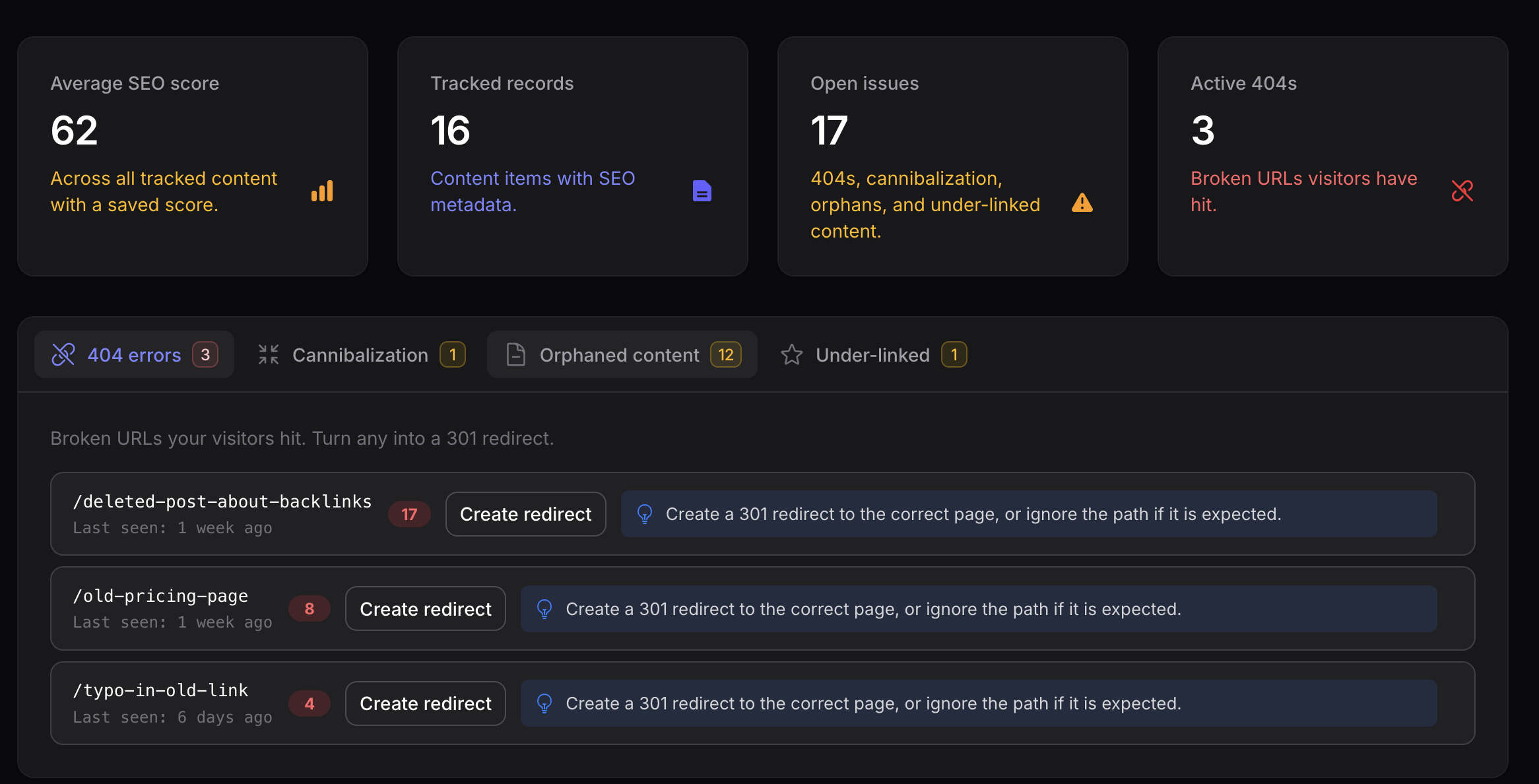
middleware serves 301 rules with caching, logs 404s, and lets you create redirects from logged dead URLs in one click.
SEO Health dashboard
cannibalization warnings, orphaned content, and under-linked cornerstone pages across your site.
Multiple focus keyphrases
primary keyword gets full analysis; related phrases get keyword-specific checks without duplicate spam.
Cornerstone content flagging
mark pillar pages and hold them to a higher depth bar.
Per-language readability packs
English and Dutch included; register your own for other locales.
[SCREENSHOT: SEO Health dashboard — cannibalization or 404 → redirect workflow]
Also Read: SEO: How Google’s Helpful
Get started in two commands
composer require usamamuneerchaudhary/filarank

php artisan filarank:install
The installer walks you through publishing config and migrations, then lets you pick which models to wire up. For a Post model, that typically means adding the `HasSeo` trait, dropping `SeoFields::make()` into your Filament form, and `SeoScoreColumn::make()` into your table — all in a few minutes.
Add the tags component to your frontend layout:
<x-filarank::tags :model="$post" />That's the minimum viable setup. Everything else — redirects, health reports, cornerstone flagging, layers on when you need it.
Also Read: On-Page SEO Essentials: A Helpful Guide From A Toronto SEO Agency
Who it's for
FilaRank is built for Laravel teams running content through Filament: blogs, documentation sites, marketing CMSs, knowledge bases, and any admin panel where non-developers publish pages.
If you've ever copied Yoast patterns into a custom Laravel app and wished they just worked with your Eloquent models, this is for you.
Learn more
Documentation: https://docs.filarank.com/
Live demo: https://filarank.com/
Package: https://filamentphp.com/plugins/usama-muneer-filarank-pro